ตู้ทีวีบิ้วอิน ออกแบบอย่างไรให้ซ่อนสายไฟและใช้งานได้จริง
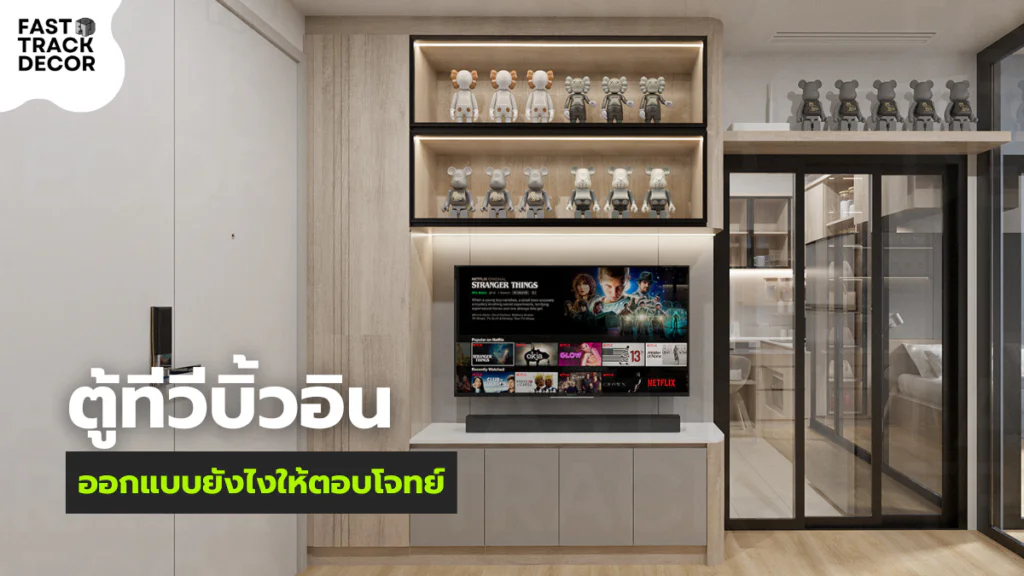
ตู้ทีวีบิ้วอิน ออกแบบอย่างไรให้ซ่อนสายไฟและใช้งานได้จริง
ตู้ทีวีบิ้วอินที่ “ดูเรียบ” จริง ๆ ไม่ได้อยู่ที่หน้าบานอย่างเดียว แต่เกิดจาก การวางระบบสายไฟ + จุดปลั๊ก + ช่องอุปกรณ์ ตั้งแต่ก่อนผลิต
บทความนี้สรุปแบบที่ใช้ได้จริง ทั้งคอนโดและบ้าน ให้ซ่อนสายไฟได้เนียนและใช้งานสะดวก
1) เริ่มจาก “เช็กลิสต์อุปกรณ์” ก่อนออกแบบ
ให้ลูกค้าระบุ (หรือถ่ายรูปของจริง) เพื่อกำหนดช่อง/ปลั๊กให้พอดี
ขนาดทีวี (นิ้ว) + ตำแหน่งแขวนหรือวาง
Soundbar / ลำโพง / ซับวูฟเฟอร์
กล่อง Android/Apple TV / True box / Router / Switch
เครื่องเกม (PS5/Xbox) หรืออื่น ๆ
ต้องการไฟซ่อน LED หรือไม่
ทำไมสำคัญ: ถ้าไม่รู้ของจริง จะเผื่อช่องผิด → สายรก / ร้อน / ใส่ไม่ลง
2) วาง “จุดปลั๊ก” ให้ถูกตำแหน่ง (หัวใจของการซ่อนสาย)
จุดที่ควรมี (อย่างน้อย)
ปลั๊กหลังทีวี (สำหรับทีวีโดยตรง)
ปลั๊กในช่องอุปกรณ์ (สำหรับกล่อง/เราเตอร์/เครื่องเกม)
ช่องเดินสาย (รูร้อยสาย) จากทีวีลงมาที่ช่องอุปกรณ์
เคล็ดลับ: ปลั๊กทีวีควรอยู่ “กลางหลังทีวี” ไม่ใช่ต่ำเกินไป ไม่งั้นสายจะโผล่
3) ทำ “ทางเดินสาย” แบบไม่เห็นสายจริง
วิธีที่เวิร์กสุดคือทำให้สาย “วิ่งอยู่หลังตู้” ไม่วิ่งหน้าตู้
ทำ ช่องเดินสายแนวตั้ง หลังแผงทีวี (ซ่อนทั้งหมด)
เจาะ รูร้อยสาย พร้อมยางกันบาด 2 จุด: หลังทีวี + ช่องอุปกรณ์
แยกช่องสำหรับ สายไฟ กับ สายสัญญาณ/LAN ลดสัญญาณรบกวน
4) เผื่อ “ช่องระบายความร้อน” ให้กล่องไม่ร้อน
กล่องทีวี/เราเตอร์/เครื่องเกม “ร้อนง่าย” ถ้าปิดทึบจะพังไว
แนะนำ:
ช่องอุปกรณ์ควรมี ช่องลมด้านหลัง หรือบานที่ระบายอากาศได้
ถ้าจำเป็นต้องปิดทึบ ให้เจาะช่องลม/ทำช่องว่างด้านหลัง
เครื่องเกมควรเผื่อพื้นที่ “รอบตัว” มากกว่ากล่องทีวีทั่วไป
หลายเคสสายซ่อนสวย แต่เครื่องร้อนจนดับ = ออกแบบไม่เผื่อระบาย
5) ออกแบบ “ความสูง–ความลึก” ให้ดูดีและใช้งานจริง
ตัวหลัก ๆ ที่ควรคิด
ระดับสายตา: จุดกึ่งกลางทีวีควรใกล้ระดับสายตาขณะนั่ง
ความลึกชั้นวาง: ถ้ามี soundbar/กล่อง ควรเผื่อความลึกพอ
ตู้ล่าง: เป็นที่ซ่อนปลั๊กและอุปกรณ์ได้ดีที่สุด + เก็บของเพิ่ม
6) แยกโซนให้ใช้งานง่าย (ไม่รก)
โครงยอดนิยมที่ใช้ได้จริง:
โซนทีวี (บน): แขวน/วาง
โซนอุปกรณ์ (กลาง/ล่าง): กล่อง/เราเตอร์/เกม
โซนเก็บของ (ตู้ล่าง): ลิ้นชัก/บานปิด
โซนโชว์ (ข้าง/บน): ตู้โชว์กระจก + ไฟซ่อน (ถ้าต้องการ)
7) ถ้าอยากได้ “งานเรียบ” เพิ่มความพรีเมียมได้ด้วย 3 อย่างนี้
บานกด (push) หรือมือจับซ่อน → หน้าตู้ดูคลีน
ไฟซ่อน LED โทนอุ่น → ช่วยให้ผนังทีวีดูมีมิติ
ตู้จรดฝ้า → เก็บของเพิ่ม + ดูเต็มผนัง
8) ข้อมูลที่ควรส่งให้ FAST TRACK DECOR เพื่อประเมิน/ทำแบบไว
ส่ง 3 อย่างนี้ได้เลย
ขนาดผนังที่จะทำ (กว้าง×สูง) + ความลึกที่ต้องการคร่าว ๆ
รูปหน้างาน + ตำแหน่งปลั๊กเดิม
รายการอุปกรณ์ (ทีวี/กล่อง/เราเตอร์/เครื่องเกม/soundbar)
ตัวอย่างข้อความ (Copy ได้เลย):
“ผนังทีวี กว้าง 3.2 ม. สูง 2.6 ม. ต้องการตู้ล่างลึก 0.40 ม.
ทีวี 65 นิ้ว + soundbar + True box + router ขอซ่อนสายทั้งหมด
ผิวลามิเนตโทนไม้-ขาว และขอตู้โชว์กระจกมีไฟซ่อน”
สรุปสั้น ๆ
ตู้ทีวีบิ้วอินที่ซ่อนสายเนียนและใช้งานจริง ต้องทำให้ครบ 3 เรื่อง:
✅ จุดปลั๊กถูกตำแหน่ง
✅ มีทางเดินสายจากทีวีสู่ช่องอุปกรณ์
✅ ช่องอุปกรณ์มีระบายความร้อน